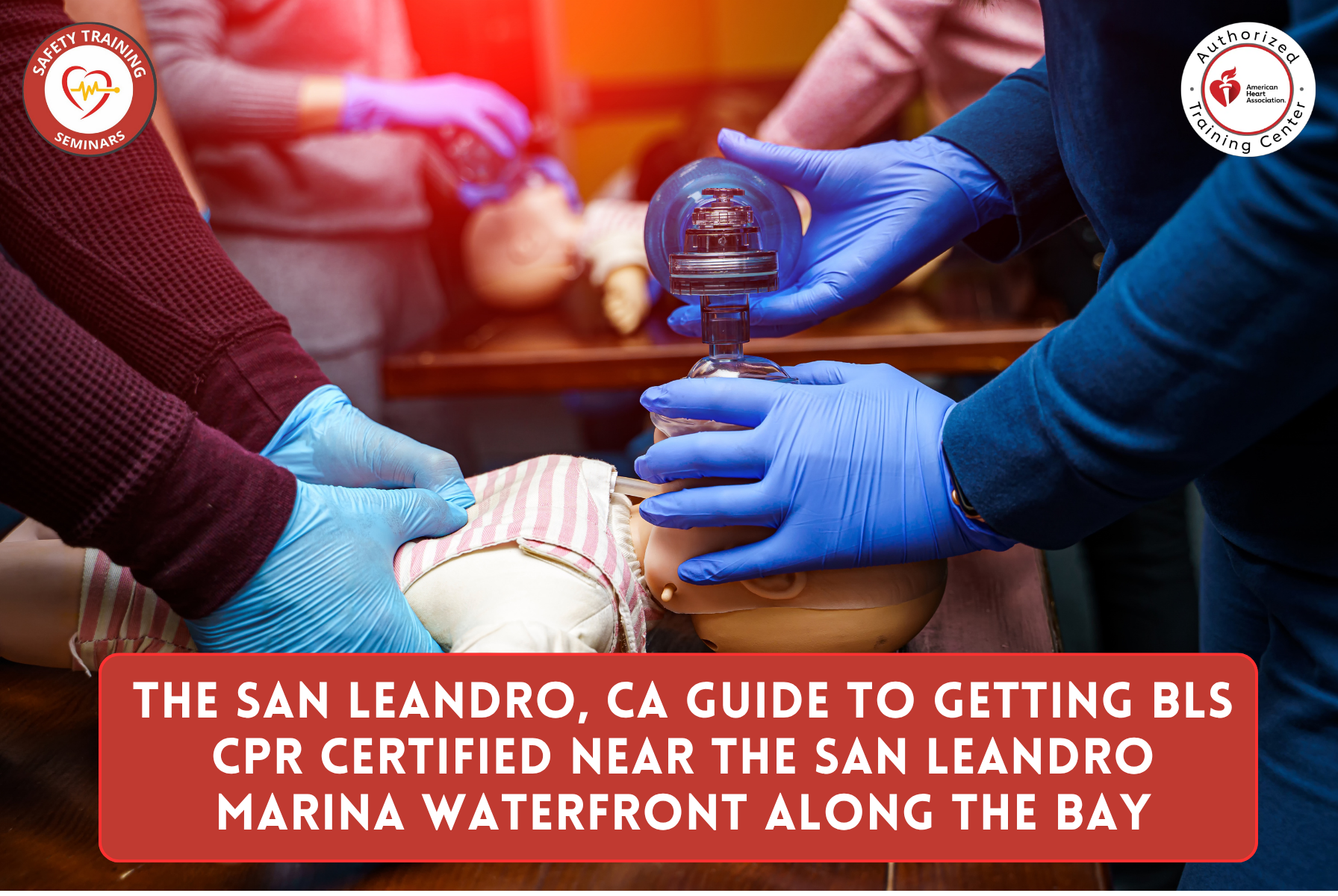
People who live, work, study, or spend time around the San Leandro Marina waterfront may need BLS CPR certification for a healthcare job, clinical program, workplace requirement, or professional renewal. The best first step is to identify the exact course your employer, school, or licensing organization requires before registering.
A BLS CPR Certification Course is generally designed for people who need structured training in recognizing cardiac emergencies, performing CPR, using an automated external defibrillator (AED), and working effectively during a resuscitation response. In San Leandro, CA, choosing a local class can simplify the process of completing required hands-on training.
This guide explains how to select the right course, what to expect, how to prepare, and what to review before enrolling.
Key Takeaway: If you need BLS certification in San Leandro, confirm the required course type first, especially for employment, school, or a clinical role. Then compare training options based on hands-on skills requirements, course format, and the documentation your organization expects.
Start With the Requirement, Not the Course Name
“CPR certification” can mean different things depending on why you need training. A parent or community member may want general CPR and First Aid, while a nurse, medical assistant, EMT student, dental professional, or allied-health worker may specifically be asked for BLS.
BLS, or Basic Life Support, is commonly associated with healthcare and clinical environments. It generally places greater emphasis on coordinated CPR response, AED use, and team-based resuscitation skills than a community CPR class.
Before registering, check the exact wording of your requirement. Look at onboarding paperwork, school instructions, renewal notices, or employer messages. If the document says “BLS,” do not assume that any CPR card will satisfy it.
If you are comparing nearby options, the Alameda CPR, BLS, ACLS, and PALS course page provides another East Bay location to review.
What Happens in a BLS CPR Certification Course?
A BLS class prepares students to respond to cardiac and breathing emergencies using an organized sequence of actions. Training commonly covers CPR concepts, AED use, emergency response priorities, and hands-on skill performance.
The practical portion matters because CPR is a physical skill. Learners practice compression technique, body position, ventilation coordination, and transitions between tasks. Healthcare-oriented BLS training may also include team-response scenarios.
Depending on the course format, you may receive instruction, watch demonstrations, practice on training equipment, and complete a skills check or assessment.
If your employer or school requires hands-on evaluation, confirm that requirement before enrolling. An online-only certificate may not meet every organization’s policy.
BLS, CPR and First Aid, ACLS, PALS, or NRP: Which Fits?
The correct class depends on your role and the requirement you are trying to satisfy. A more advanced-sounding course is not automatically a substitute for another required credential.
- BLS: often relevant to healthcare professionals, clinical students, and workers who may participate in a professional emergency response.
- CPR and First Aid: may fit teachers, childcare staff, coaches, workplace teams, caregivers, fitness professionals, and the public, depending on the requirement.
- ACLS: advanced cardiovascular life support training for healthcare professionals involved in managing complex adult emergencies.
- PALS: pediatric advanced life support for healthcare roles involving seriously ill or injured infants and children.
- NRP: neonatal resuscitation training for professionals involved in newborn care.
Match the class to the credential requested by your employer, school, licensing board, or clinical program. Readers considering other East Bay locations can also review BLS and advanced life support courses in Berkeley.
How to Prepare Before Your San Leandro BLS Class
A little preparation can make training easier. Verify the course name and compare it with any written requirement you received.
Plan for active skills practice. CPR training may involve kneeling, repeated compressions, and moving between stations, so wear clothing that allows comfortable movement. Review registration instructions and bring any materials or confirmation information requested by the provider.
Focus on learning the sequence and technique rather than memorizing terminology alone. Skills practice is where the steps begin to make sense as a coordinated response.
Local BLS Training for San Leandro and the East Bay
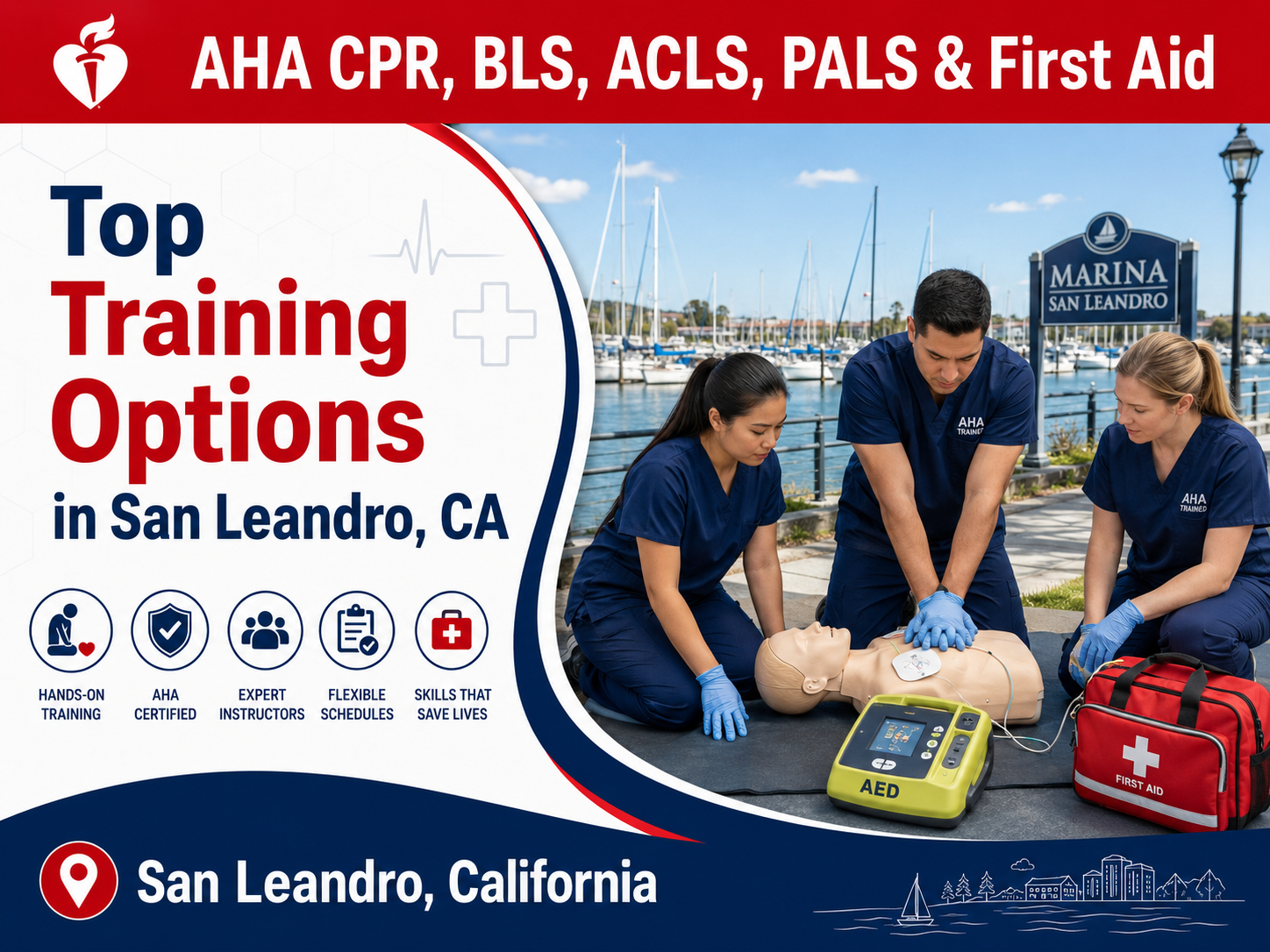
People near the San Leandro Marina waterfront may be completing certification for a healthcare job, clinical placement, workplace requirement, school program, or personal preparedness.
Local training can also suit learners traveling from Alameda, Hayward, Berkeley, Fremont, Dublin, or other East Bay communities. The right location depends on the required course and training format rather than the city name alone.
If Dublin is more practical for your plans, review the Dublin CPR and healthcare certification course page before deciding where to attend.
Where Safety Training Seminars Fits Into Your Next Step
Safety Training Seminars offers local options for CPR, First Aid, BLS, ACLS, PALS, or NRP training in the San Leandro area. The San Leandro training center is located at 433 Callan Avenue, Suite 307, San Leandro, CA 94577.
Your next step is to review the course that matches your requirement and then check the current registration information for that location. If you are deciding between San Leandro and another East Bay location, compare the specific certification offered rather than choosing only by geography.
You can also review the Emeryville CPR, BLS, ACLS, and PALS training page if that location better fits your plans. Confirm any role-specific requirement with your employer, school, or licensing board before registering.
Common Registration Mistakes to Avoid
One common mistake is registering for general CPR when the requirement specifically says BLS. The names sound related, but an employer or school may treat them differently.
Another is assuming that every online course satisfies a hands-on certification requirement. If skills demonstration is required, verify how that portion is completed.
Also avoid assuming that a coworker’s or classmate’s requirement is identical to yours. Different job roles, schools, clinical sites, and employers may use different standards.
Checking the requirement early gives you time to correct a course choice before a deadline becomes a problem.
FAQs About BLS CPR Certification in San Leandro
Do I need BLS or a regular CPR class for my job in San Leandro?
It depends on your employer and role. Healthcare workers and clinical students are often asked for BLS, while other workplaces may request CPR, First Aid, or both. Use the exact wording in your onboarding documents or renewal notice, and confirm with your employer if the requirement is unclear.
Can I take an online-only BLS course?
An online-only option may not satisfy every employer, school, or licensing requirement because some organizations require hands-on skills evaluation. Before enrolling, confirm whether your required course includes an in-person skills component or another accepted method of demonstrating CPR and AED skills.
What should I wear to a BLS CPR class in San Leandro?
Wear comfortable clothing that allows you to kneel, bend, and perform repeated CPR practice. Training may involve hands-on work with manikins and AED trainers, so clothing that does not restrict movement is a practical choice.
Can someone from Alameda or Hayward take a class in San Leandro?
Yes. Learners can generally choose a training location based on the course they need and available options. If you are coming from Alameda, Hayward, or another East Bay community, verify the exact course type and registration details before making travel plans.
How do I know whether my certification will be accepted?
Confirm directly with the organization requesting the credential. Employers, schools, licensing boards, and clinical programs may have their own policies about course type, provider, format, or hands-on evaluation. Written requirements are especially useful when comparing course options.
Getting Certified With the Right Course in San Leandro
Getting BLS CPR certified near the San Leandro Marina waterfront starts with identifying the exact credential you need before choosing a class. For healthcare professionals and students, that may mean BLS; for other roles, CPR and First Aid may be more appropriate. Advanced courses such as ACLS, PALS, or NRP should be selected when they match a professional requirement.
Safety Training Seminars provides local training options in San Leandro for learners completing healthcare, workplace, school, or personal training goals. Review the course details, confirm any employer or school requirements, and choose the format that includes the skills evaluation you need.
If you are also considering nearby locations, compare the linked East Bay course pages for course availability, location details, and registration information before deciding where to enroll.