San Leandro sits at a busy crossroads in the East Bay. Interstates 880 and 580 frame the city, two BART stations serve its neighborhoods, and its workforce moves every day between warehouses, medical offices, classrooms, and family-run shops. The city runs from the bayshore up toward the hills near Castro Valley. That mix explains why so many residents and local workers search for American Red Cross CPR and First Aid certification classes in San Leandro, CA. Some need a certificate for a new job. Others are renewing before a card expires, meeting a school or clinical-program requirement, or want to know what to do if a coworker, student, or relative suddenly needs help. Most options fall into four groups: CPR, First Aid, CPR/AED, and combined First Aid/CPR/AED training. The first real decision is which one matches your situation, and that is what this article helps you work out.
Key Takeaway
If you live or work in San Leandro, you can choose American Red Cross CPR and First Aid training based on why you need it: a workplace safety role, a healthcare or childcare job, a school program, or personal readiness at home. Confirm the exact course your employer or school expects before you register. Then pick a local class that includes the hands-on skills practice your requirement calls for.
What Do American Red Cross CPR and First Aid Classes Teach?
CPR training teaches you how to respond when someone’s breathing or heartbeat stops. That means recognizing the emergency, calling for help, and giving chest compressions and rescue breaths until advanced care arrives.
First Aid training covers a much wider range of situations. These are the everyday injuries and sudden illnesses that don’t involve cardiac arrest but still need a calm, informed response in the minutes before professional help takes over.
AED training connects the two. An automated external defibrillator is a portable device used during cardiac arrest, and learning to operate one usually builds directly on CPR skills. That is why many courses pair CPR with AED instruction.
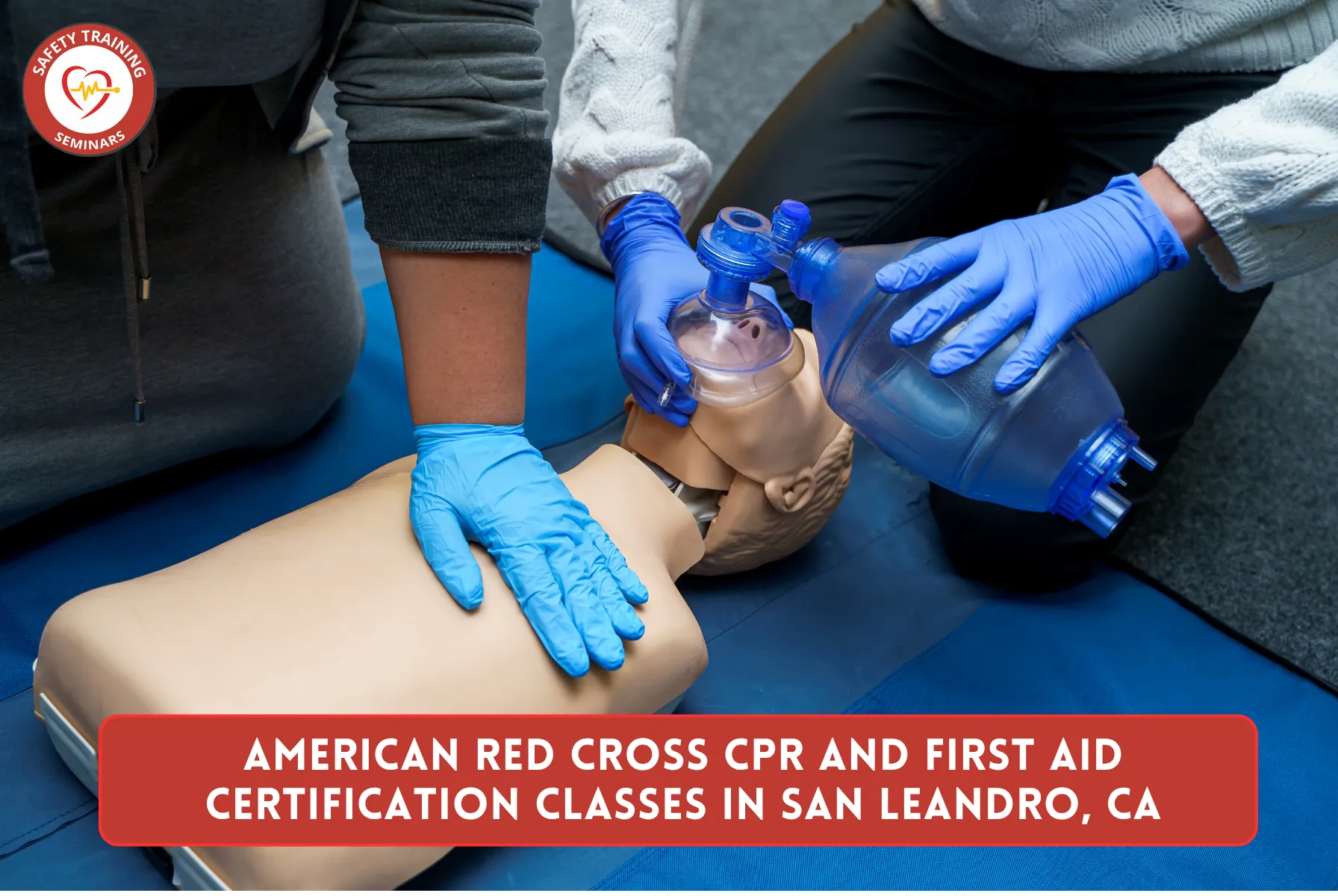
CPR and First Aid are often taught together because real emergencies rarely fit neatly into one category. A person who collapses may also be injured from the fall. Even so, the right course depends on your situation, and content, format, and eligibility vary from one class to another. Hands-on practice on training manikins matters too. Many workplaces and professional programs want proof that you performed the skills in person, not just watched a video about them.
CPR Training: Adult, Child, and Infant Skills
CPR classes differ mainly in who you are learning to help. Some courses focus on adults. Others add child and infant techniques, which differ in hand placement, compression depth, and breathing approach. A warehouse supervisor on San Leandro’s industrial west side may only need adult CPR/AED. A preschool aide in the Washington Manor neighborhood will likely need pediatric skills as well.
In a typical CPR session, you can expect:
- Recognizing an unresponsive person and activating emergency services
- Practicing chest compressions and rescue breaths on manikins
- Learning when and how an AED fits into the response
- Working through realistic scenarios with an instructor
Exact content depends on the specific American Red Cross course you select. Read the course description closely rather than assuming every “CPR class” covers the same ground.
First Aid and AED Training for San Leandro Workplaces and Families
First Aid education goes beyond cardiac emergencies. It prepares people to act during the injuries and medical episodes that happen in offices, gyms, playgrounds, kitchens, and job sites. When a course combines First Aid with CPR and AED training, you learn a broader, connected response rather than isolated skills.
This combined format appeals to many groups around San Leandro. That includes employees named as their company’s first-aid responder, coaches at youth leagues, fitness instructors, in-home caregivers, and parents who want more confidence at home. At the federal level, OSHA’s first-aid standard expects employers to have trained responders available when medical care isn’t close by. That is one reason businesses often send staff to First Aid and CPR training in San Leandro rather than leaving it to chance.
Who Signs Up for These Classes?
Workplace Employees
San Leandro has long carried a strong manufacturing, distribution, and light-industrial base, especially along the corridors near I-880. Employers in these settings often designate specific staff for first-aid response, and requirements vary by company and job role.
Healthcare Support Staff
The city is home to San Leandro Hospital and a Kaiser Permanente medical center, with clinics and senior-care facilities throughout the area. Medical assistants, caregivers, and front-desk staff may need CPR training. Some clinical roles need a different, more advanced certification, so check with your employer.
Teachers and Childcare Providers
Schools, preschools, and licensed family childcare homes serve families across San Leandro and neighboring San Lorenzo. California’s childcare licensing rules call for pediatric CPR and First Aid training for certain staff, but the specifics depend on the program and role.
Students
Nursing, EMT, medical-assistant, and education students often need CPR or First Aid certification before starting internships or clinical placements. Confirm the accepted course with your program first.
Parents and Family Caregivers
Many local households include young children, aging parents, or both. For these families, training is less about a certificate and more about knowing what to do.
How to Choose the Right Course
Choosing the wrong class is the most common and costly mistake, because you may have to retake training that didn’t meet your requirement.
| Training Type | Typical Use |
| CPR | Focused training on responding to cardiac and breathing emergencies |
| First Aid | Responding to common injuries and sudden illnesses |
| CPR/AED | CPR skills combined with defibrillator use |
| First Aid/CPR/AED | Broader emergency-response training covering all three areas |
This table is a general orientation, not a legal or employment standard. Before registering, confirm the exact requirement with whoever is asking for the certificate. That could be your employer, school, healthcare organization, licensing body, professional association, or workplace safety coordinator. Ask three questions: Which course title do you accept? Does it need an in-person skills component? Do you need pediatric content?
Local Considerations for San Leandro Learners
Location shapes how easily people fit training into their week. San Leandro’s workforce is heavily commuter-based. Many residents work in Oakland, Hayward, Fremont, or across the bay, while others come into San Leandro each morning from Castro Valley, Alameda, and San Lorenzo. For both groups, a training site near downtown can be easier to reach than one deep in another city. That is especially true for anyone relying on BART or trying to avoid peak traffic on 880.
The city’s working profile also matters. Shift workers in distribution and healthcare may need weekend or off-peak sessions. Small-business owners along East 14th Street and in the downtown area may want to train several employees at once. Teachers often schedule renewals during summer or school breaks. Consider when your certificate expires and plan ahead, since classes can fill up.
Safety Training Seminars in San Leandro
For people who want to train close to home or work, Safety Training Seminars offers a local option in the city. The San Leandro CPR Training Center is located at 433 Callan Avenue, Suite 307, San Leandro, CA 94577, in the downtown area.
Before you register, review the San Leandro CPR, BLS, ACLS, and PALS course page to compare what’s listed. Look at the course title, format, current schedule, and pricing, and match them against your employer’s or school’s requirement. If anything is unclear, contact the training center directly before paying. Checking first is far easier than retaking a course later.
Why Consider Safety Training Seminars for CPR and First Aid Training in San Leandro, CA
A few practical reasons may make this location worth a look:
- A physical San Leandro training site, useful for courses that require in-person skills practice
- A downtown location that serves residents and commuters from nearby East Bay communities
- Several emergency-response course categories in one place, including CPR and First Aid options
- Course details available online so you can review options before contacting the center
Frequently Asked Questions
Can San Leandro employers require specific CPR or First Aid courses?
Yes, many do. Employers can set their own training expectations, especially for designated first-aid responders, healthcare support roles, and childcare staff. Some accept any American Red Cross CPR course, while others specify First Aid/CPR/AED or in-person skills testing. Ask your supervisor or HR department for the exact course name before enrolling.
Is First Aid training the same as CPR training?
No. CPR focuses on cardiac arrest and breathing emergencies, while First Aid covers a broader range of injuries and sudden illnesses. Many people take a combined First Aid/CPR/AED course because it addresses both, but the right choice depends on what your job, school, or organization requires.
I commute from Castro Valley or Hayward. Is a San Leandro class practical?
For many commuters, yes. San Leandro sits between Oakland and Hayward with direct access to I-880, I-580, and BART, so a downtown training site can be easier to fit around a workday. Compare the class times with your commute before booking.
Do childcare providers in San Leandro need pediatric training?
Often, yes. California childcare licensing rules call for pediatric CPR and First Aid training for certain staff. Requirements vary by program type and role, so confirm the specific course with your licensing contact or program director before registering.
Will I practice skills hands-on during class?
Many American Red Cross CPR and First Aid courses include hands-on practice with manikins, and some requirements specifically call for an in-person skills session. Formats vary by course, so check the class description to see whether it includes the component you need.
What should I check before signing up?
Start by confirming the exact course your employer, school, or program accepts. Then review the class format, whether pediatric content is included, the current schedule and price, and when your existing certification expires. Settling these details first helps you avoid enrolling in the wrong class.
Final Thoughts
CPR training prepares you for cardiac and breathing emergencies. First Aid covers the wider range of injuries and illnesses you’re more likely to see day to day. AED instruction links the two, and combined courses bring all three together. For San Leandro residents and the many people who commute through the city, the course you choose matters more than the class you happen to find first.
Once you know what your employer, school, or program expects, compare the available options with Safety Training Seminars and see which session fits your schedule. A few minutes spent confirming requirements now can save you a repeat class, and it leaves you with training that actually serves your role.